Egyptian Talcum Powder: What It Is, Uses, and How It Is Produced
Egyptian talcum powder is a high-purity hydrated magnesium silicate mineral powder processed from Egyptian talc ore for use in ceramics, plastics, paper, coatings, and selected personal care applications. In industrial supply, Egyptian talcum powder is valued for softness, whiteness, chemical stability, and particle-size control.
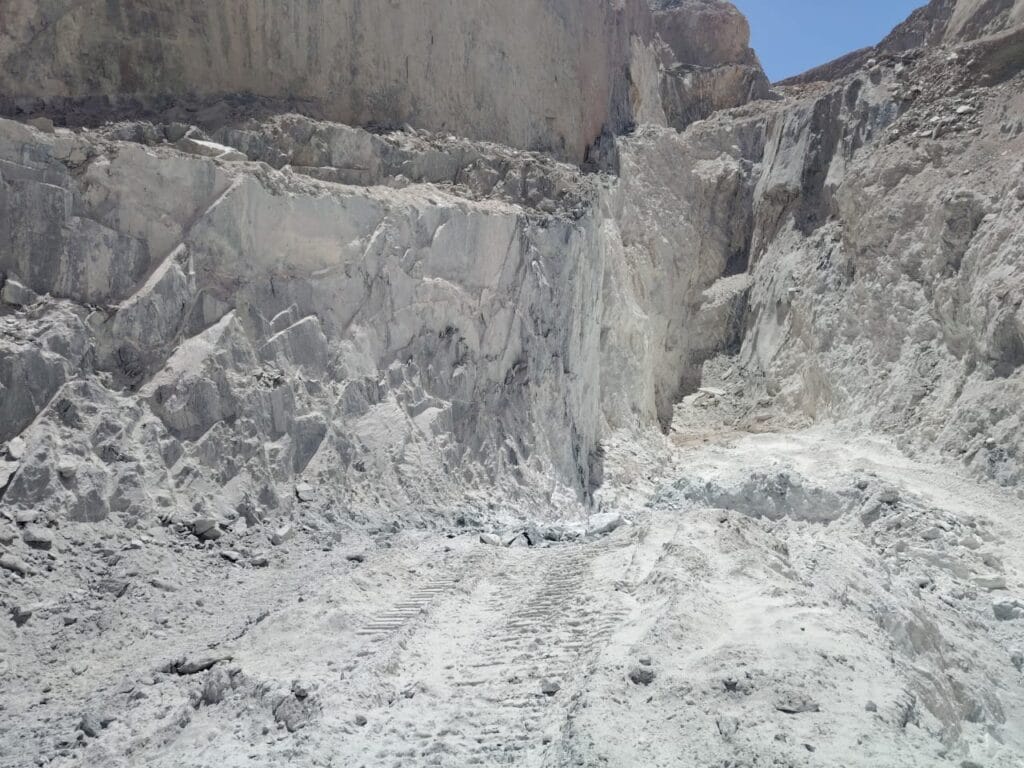
[IMAGE PLACEHOLDER: Featured image showing Egyptian talc ore, milling, and finished powder bags. Use a wide industrial photo with labels for quarry, grinding, and packing.]
What is Egyptian talcum powder?
Talcum powder is a finely ground form of talc, a soft mineral composed mainly of magnesium, silicon, and oxygen. In industrial contexts, the powder is selected for its lubricity, brightness, low abrasiveness, and thermal stability.
Egyptian talcum powder refers to talc sourced and processed in Egypt. For buyers, the main evaluation points are purity, brightness, mesh size, moisture level, and consistency between batches.
For related product details, see Macron’s Talc Powder product page and the broader company Profile.
How is Egyptian talcum powder produced?
Egyptian talcum powder is typically produced through a controlled mineral-processing sequence. The objective is to convert raw talc rock into a powder grade that matches industrial specifications.
Main production steps
- Extraction from talc deposits and quarries.
- Sorting to remove visible impurities and separate suitable ore.
- Crushing into smaller feed material.
- Grinding and micronizing to the required particle size.
- Screening and classification by mesh or micron range.
- Quality control testing for chemistry, brightness, and physical performance.
- Packing and dispatch for local or export supply.
This production logic aligns with Macron’s process-based supply model described across its latest news and articles and product pages.
[VIDEO PLACEHOLDER: 45-60 second factory walkthrough showing extraction, crushing, grinding, lab testing, and bagging. Add subtitles with each step name.]
Why is Egyptian talcum powder used in industry?
Egyptian talcum powder is used because talc contributes both functional performance and process efficiency. Different industries choose different grades depending on fineness, color, and mineral composition.
Common industrial uses
- Ceramics: improves thermal behavior, dimensional stability, and workability.
- Plastics: increases stiffness and dimensional stability in selected compounds.
- Paper: supports smoothness, opacity, and print performance.
- Paints and coatings: helps matting, suspension, and surface feel.
- Rubber: can assist reinforcement and processing behavior.
- Filler applications: used where a soft, platy mineral is required.
What properties matter most when buying Egyptian talcum powder?
The most important buying criteria depend on the final application. However, several properties are commonly reviewed in technical and commercial discussions.
Key specification factors
- Purity: lower impurity levels support more consistent performance.
- Brightness/whiteness: important for appearance-sensitive applications.
- Particle size distribution: affects dispersion, texture, and processability.
- Moisture content: influences storage and handling.
- Bulk density: relevant for packing and formulation control.
- Chemical stability: important for predictable industrial behavior.
- Consistency: stable quality between shipments reduces production variation.
Egyptian talcum powder vs other filler minerals
The right mineral depends on end use, formulation goals, and processing conditions.
| Mineral | Main composition | Typical advantage | Common uses |
|---|---|---|---|
| Egyptian talcum powder | Hydrated magnesium silicate | Softness, lubricity, platy structure | Ceramics, plastics, paper, coatings |
| Feldspar | Aluminosilicate minerals | Fluxing behavior at high temperature | Ceramics, glass |
| Quartz | Silicon dioxide | Hardness and chemical resistance | Glass, foundry, construction |
Buyers comparing minerals can review Macron’s related materials, including Feldspar and Quartz.
When should a buyer choose Egyptian talcum powder?
A buyer should choose Egyptian talcum powder when the application benefits from fine particle size, smooth texture, stable mineral behavior, and reliable bulk supply. It is especially relevant when a formulation needs a mineral that improves handling, surface properties, or dimensional performance.
Industrial buyers should request:
- a technical data sheet,
- a particle-size specification,
- a chemical analysis,
- a sample for lab approval, and
- confirmation of packing and shipment options.
How can buyers evaluate a supplier?
A supplier should be assessed on both product quality and operational reliability. The best review process combines lab validation with supply-chain checks.
Supplier evaluation checklist
- Verify source ownership or control of quarries.
- Review production capacity and lead times.
- Confirm quality control procedures and test reporting.
- Check grade availability for coarse, fine, or micronized powder.
- Ask about export documentation and packing formats.
- Test a production sample in the target application.
FAQ about Egyptian talcum powder
What is Egyptian talcum powder used for?
Egyptian talcum powder is used mainly in industrial sectors such as ceramics, plastics, paper, paints, and rubber. The exact grade depends on the required fineness, brightness, and mineral composition.
Why do manufacturers choose Egyptian talcum powder?
Manufacturers choose Egyptian talcum powder for its functional mineral properties and the availability of industrial-scale supply. Important decision factors usually include purity, consistency, and fit for the final formulation.
How is Egyptian talcum powder different from raw talc rock?
Raw talc rock is the mined mineral in solid form, while Egyptian talcum powder is the processed and classified finished material. The powder has controlled particle size and is prepared for direct industrial use.
How long does supplier qualification take?
Supplier qualification often takes a few days to several weeks, depending on sample approval, technical review, and purchasing procedures. Larger industrial buyers usually require lab testing before commercial orders.
Where is Egyptian talcum powder commonly supplied?
Egyptian talcum powder is supplied to both local Egyptian manufacturers and export markets. Supply routes depend on packing format, order volume, and shipping requirements.
What documents should a buyer request?
A buyer should request a technical data sheet, certificate of analysis, packing details, and shipment information. For regulated or export transactions, buyers may also request additional compliance documents.
When is fine powder better than coarse powder?
Fine powder is generally preferred when a process requires better dispersion, smoother finish, or tighter formulation control. Coarser grades may be selected for applications where ultra-fine milling is not necessary.
Is Egyptian talcum powder suitable for every application?
No. Suitability depends on the target industry, required purity, particle size, and formulation performance. Every industrial user should validate the material in actual production conditions before full-scale purchasing.
Suggested on-page media and content assets
- Featured image: quarry-to-powder production overview.
- Short process video: extraction to packing.
- Optional downloadable asset: technical data sheet and grade comparison PDF.
Sources
- Macron company website content provided in this project context, including product, profile, and article pages.
- Search-result source summaries provided in this project context for industry usage patterns in ceramics, paper, plastics, and personal care.