
Quartz
Overview - QUARTZ
Macron provides high-purity quartz extracted and processed through multiple stages including open-pit mining, fine crushing, and advanced purification techniques like acid leaching, flotation, and magnetic separation. Macron quartz offers excellent chemical purity, physical durability, and various calibrated grain sizes tailored for diverse industrial applications.
Specifications and in-kind characteristics
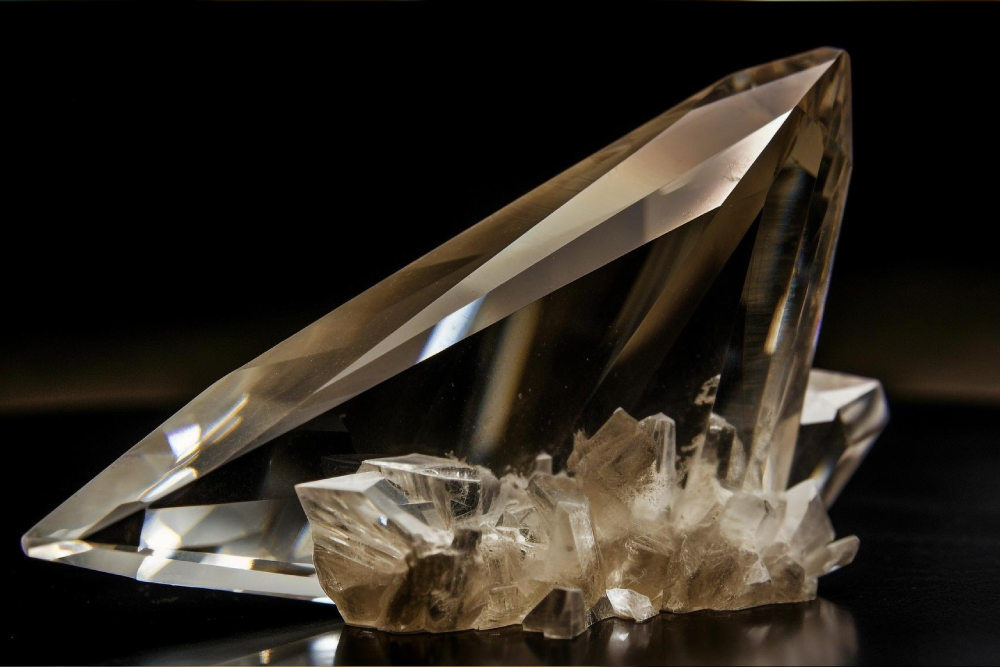
- Quartz features a non-metal glass glitter.
- The common colors are white, grey, purple and yellow.
Why Choose Macron Company
Your Success is Our Mission
We create a world-class work environment every day, with a focus on safety through continuous education.
We take pride in delivering high-quality products that meet specifications and support sustainable projects.
Synthetic crystals in laboratories are artificially produced by dissolving raw silicon dioxide (SiO2) in an alkaline water solution at high temperature. Although this process is slow, it provides high purity and generally high quality crystals that are almost as good as naturally existing quartz crystals. Artificial quartz crystals are resistant to acids, corrosion, high temperatures, corrosion, shocks, pressure and bending, and synthetic crystals are used in the electronics industry, semiconductors, solar industry, optical discs and even printing tools.
Quartz sand is often blended with coherent materials such as clay, sodium silicate resin and oil and is used for metal casting purpose. Quartz sand properties such as high melting point and high strength help in metal casting process. Also, grizzovelin quartz is used to smooth the raw edges on metals after they are cut, poured or dug, in the metal casting industry. Quartz sand is also added to molten metals for the process of removing impurities, mostly from oxygen. The sand sticks to the impurities and is then easily removed.
Some materials such as ceramic, crystal, and quartz can produce electricity when exposed to mechanical pressure, the ability of these materials is called to shift voltage to and from mechanical pressure with compression electricity, quartz crystals maintain an accurate frequency standard, helping to regulate clock movement, which makes clocks extremely accurate. Quartz is also used in: radios, microprocessors, and many other technological and industrial applications.
Glass making is an essential use of quartz; The glass is made from a chemical compound known as silica dioxide “SiO2”, a colorless crystal compound found such as quartz or sand, which dissolves silica dioxide “which must be exceptionally 99.9% pure” and is left to cool to any desired shape or dimension. Quartz optical crystals are also used in the laser industry, microscopes, telescopes, electronic sensors and scientific instruments.
Quartz crystals are also used in electronics; Because it generates a current on its surface when bent or compressed, quartz crystals have been used to give accurate frequency to all wireless transmitters, radio receivers, GPS transmitters and computers.
For centuries, quartz has been used in the production of jewellery and precious stones, as its solid, polishable, crystalline and durable nature makes it an excellent material for this purpose, including quartz varieties commonly used as jewellery, citrine gemstones, mushrooms, metres, rose quartz, aventurin and opals, and also with greysopholphin structures, such as.
Laboratory crucibles are containers that are used to carry chemicals when conducting chemical or thermal tests. Quartz has a very high melting point and is chemically inert, therefore, it is used in making these crucibles. The advantages offered by quartz crucibles include: low expansion, thermal shock resistance, and excellent dimensional stability.
Quartz sand is highly resistant to crushing; During oil and natural gas extraction, sand is pushed down the oil and gas wells under very high pressure in a process known as hydraulic fracking, causing this high pressure to break the tank rocks, injecting sand into the resulting fractures, these durable sand pellets help keep the fractures open even after the pressure has gone, making it easier to flow natural gas into the well hole.